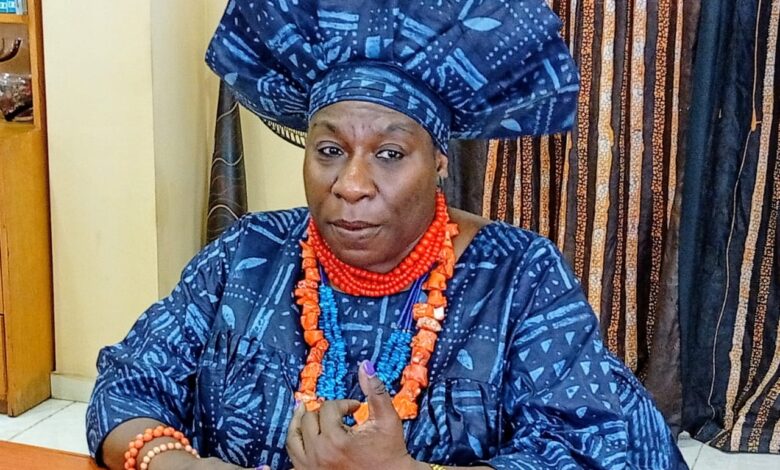
In Nigeria, titles are not mere ornaments. They are markers of achievement, discipline, and integrity. The title of Professor is the pinnacle of academic life, earned through years of teaching, research, publication, and peer review. It is not a crown to be worn prematurely. As the Yorùbá say, _“Àkìí fi àkúnya ṣe àkúnya”_ — one does not use half-cooked yam to prepare a feast.
Dr Iyabo Obasanjo’s academic record is impressive. She graduated from the University of Ibadan with a Doctor of Veterinary Medicine in 1988, obtained an MSc in Epidemiology from the University of California, Davis in 1990, and completed a Ph.D in Epidemiology at Cornell University in 1994. She has taught for decades in American universities and currently holds the rank of Associate Professor. In the Nigerian university system, that rank is equivalent to Reader. It is an honourable rank, and it entitles her to be addressed as Doctor, having earned a Ph.D.
Yet in political and social circles she is often referred to as “Professor.” She seems to like that and pretends that is correct. No. That designation is misleading. The step to full professorship, while within reach for someone of her credentials, has not yet been attained. With her background, she could prepare the requisite papers and apply for promotion to Professor at any recognised institution — including Bells University of Technology, founded by her father, Chief Olusegun Obasanjo. If that is her ambition, the path is open. But until such promotion is conferred, restraint is the honourable course. As the Igbo proverb reminds us, _“Eziokwu bụ ndụ”_ — truth is life.
Her father’s example is instructive. Chief Olusegun Obasanjo holds both earned and honorary doctorates, yet he does not routinely parade the title “Dr.” in public life. He understands the distinction between earned qualifications and honorific recognition. Dr Iyabo Obasanjo, with her solid academic foundation, would do well to follow that example. To remain within the honourable title of Doctor is to remain true to type.
Nigeria has precedent on this matter. In 2003, the Senate screening of Prof. Babalola Borishade was stalled repeatedly over questions about his professorial status. The Senate’s insistence on clarity set a standard: titles must be used truthfully. The lesson is plain — inflated titles erode public trust, while honesty preserves dignity.

This is not peculiar to Nigeria. In the United States, Senator Elizabeth Warren faced criticism over claims about her academic background, despite being a tenured professor at Harvard Law School. In India, several politicians have been accused of presenting honorary doctorates as earned degrees, prompting universities to clarify the difference. In Germany, former Defence Minister Karl-Theodor zu Guttenberg resigned in 2011 after it emerged that portions of his doctoral thesis were plagiarised — a scandal that underscored how seriously academic integrity is guarded worldwide.
The misuse of honorary doctorates compounds the problem. Across Nigeria, politicians, business leaders, and clerics insist on being addressed as “Doctor” after receiving honorary degrees, some from institutions of dubious standing. This practice devalues genuine scholarship and misleads the public. As the Hausa proverb puts it, _“Gaskiya ta fi kwabo”_ — truth is worth more than a farthing.

Dr. Iyabo Obasanjo’s case is therefore a test of integrity. She has achieved a great deal, and her academic journey commands respect. But she should resist the temptation to claim a title not yet earned. To remain a Doctor is not a limitation; it is an accurate recognition of what she has accomplished. And if she desires the crown of professorship, the route is clear: publish, apply, and be duly promoted.
In a society that prizes education, accuracy in titles is not trivial. It is a moral obligation. Truth in titles is truth in leadership. As our elders say, _“Ọ̀rọ̀ tí a bá sọ níwájú, a ò ní fi ẹ̀sùn kàn án ní ẹ̀hìn”_ — a word spoken truthfully to one’s face will not be contradicted behind one’s back.