ABEOKUTA – The Chairman of the Nigeria Economic Summit Group (NESG), Olaniyi Yusuf, has called for the adoption of Artificial Intelligence (AI) in town planning activities across Nigeria.
Speaking as the guest speaker at the 11th Waheed Kadiri Lecture Series, organized by the Nigeria Institute of Town Planners (NITP), Ogun State Chapter, Yusuf emphasized that integrating AI into urban planning would enhance productivity and efficiency.
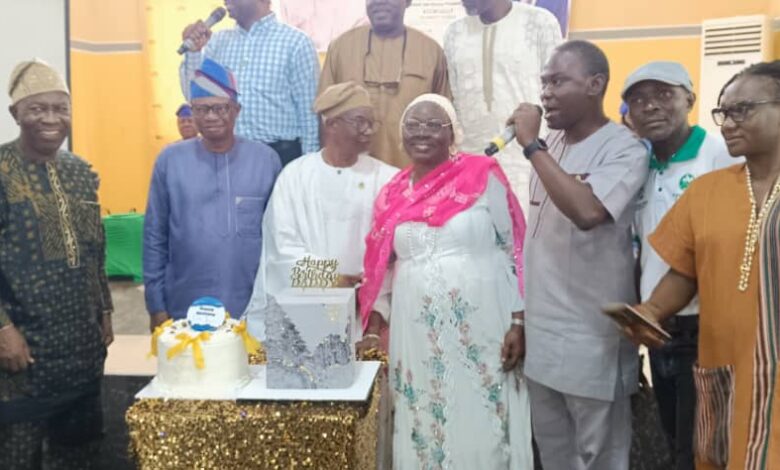
The lecture, held in Abeokuta, Ogun State, in honour of Alhaji Waheed Kadiri, a former president of NITP, was to highlight Alhaji Kadiri’s enduring contributions to the progress of the physical planning profession in Nigeria.
In his address titled, “Global Trends Re-imagining Cities for Sustainable Development and Shared Prosperity,” Yusuf urged town planners to innovate in response to rapid technological advancements, climate change, and shifts in societal dynamics.
He stressed that adopting AI would significantly increase productivity within the urban planning profession.

Citing statistics from Statista, Yusuf highlighted the growth potential of AI, revealing that the global market for AI is projected to reach $243.7 billion by 2025.
He added that Nigeria’s AI market is expected to grow at an annual rate of 27.08%, reaching $4.64 billion by 2030.

“Globally, the largest market size in the United States is estimated to be $66.21 billion by 2025,” he noted.
He emphasized that AI is already transforming industries at an unprecedented pace, including urban planning.

“From AI agents assisting with planning simulations to drones mapping cities in real-time, the possibilities are endless, and town planners must be trained to incorporate AI into their daily operations,” Yusuf explained.
He further noted that while these advancements offer remarkable potential, they also present disruptions that must be managed carefully.
Yusuf also drew attention to the food insecurity crisis in Nigeria, with over 33 million people at risk of hunger.
He encouraged town planners to design urban spaces strategically, incorporating agriculture, transportation corridors, processing zones, and industrial areas to promote sustainable food production and improve access to markets.
“Town planners must enable agriculture by integrating essential infrastructure that fosters food security and economic growth,” he said.
He also urged town planners and other future-facing professionals to study the behavioral traits of Generation Z (born between 1997-2012) and Millennials (born between 1981-1996), two of the largest generational groups in the global workforce
He posited that understanding the preferences and needs of these groups is crucial for designing cities that will cater to their evolving demands.
The Rector of Moshood Abiola Polytechnic, Jolaosho Babatunde, echoed similar sentiments, urging town planners to go beyond just constructing buildings.
“Urban planning is not just about the construction of buildings and roads. It should involve activities that foster economic growth and improve the quality of life for citizens,” he said.
In his remarks, Alhaji Waheed Kadiri, the celebrant of the event, expressed his appreciation for the recognition and lauded the leadership of NITP for organizing the lecture series in his honour.
He also encouraged town planners to adopt AI as an essential tool for enhancing the effectiveness of their work.
“Town planners must embrace AI to remain relevant and efficient in today’s rapidly evolving world,” he advised.
Kadiri also thanked the special guests, members of NITP, and all those who contributed to the success of the event, including the guest lecturer, Olaniyi Yusuf.
The lecture series provided a platform for professionals to engage with emerging trends and challenges in urban planning, as well as to reflect on Kadiri’s significant contributions to the field.