Amandla Foundation Moves To Advance African Leadership, Policy Development Through Continental Retreat

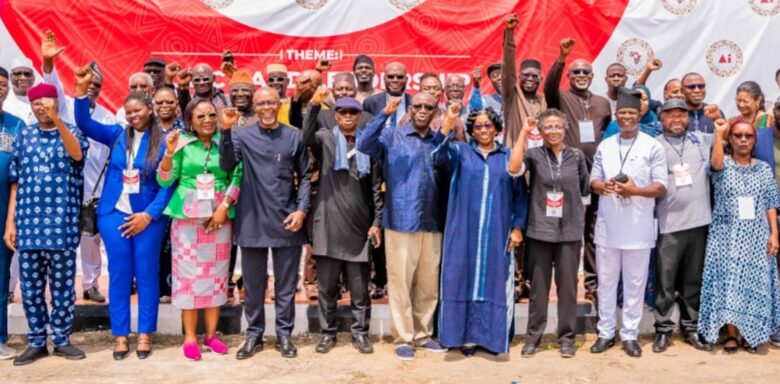
ABEOKUTA – The Amandla Institute for Policy and Leadership Advancement (AIPLA) has reaffirmed its commitment to strengthening African leadership, promoting home-grown policy solutions and building institutions capable of addressing the continent’s emerging political, economic and development challenges.
The institute stated this at the maiden Amandla Parapọ̀, its flagship policy and leadership retreat, which brought together former President Olusegun Obasanjo, African diplomats, statesmen, scholars, policy intellectuals, researchers and development advocates.
The three-day retreat, held recently at the Amandla Conference and Resort, Ilishan-Remo, Ogun State, was supported by Open Society Foundations (OSF).
The gathering provided a platform for critical discussions on Africa’s position in the changing global geopolitical order, institutional development, democratic governance, economic transformation, regional security and the future of Pan-African cooperation.
In her opening address, Co-founder and Chairperson of the AIPLA Governing Board, Erelu Bisi Adeleye-Fayemi, emphasised the need for African institutions to develop independent capacity and promote development strategies rooted in the continent’s realities.

She argued that Africa could not achieve sustainable development by relying excessively on borrowed ideas and external funding, stressing the importance of strengthening indigenous institutions, mobilising domestic resources and investing in the next generation of African leaders.
Fayemi also highlighted the importance of intergenerational leadership, noting that young thinkers, civic innovators and emerging scholars must be given opportunities to contribute to policy development and decision-making.

She called for a continental approach to addressing Africa’s challenges, maintaining that individual African countries could not effectively negotiate with major global powers without stronger regional cooperation.
The retreat examined key issues affecting the continent, including the protection of strategic natural resources, the implementation of the African Continental Free Trade Area (AfCFTA), mineral sovereignty, democratic governance, insecurity and the growing influence of artificial intelligence.

Participants advocated stronger African institutions, improved regional cooperation and the development of home-grown financing mechanisms to reduce dependence on external development assistance.
They also called for greater investment in research, technology, industrialisation and local value addition, particularly in the exploitation of Africa’s critical mineral resources.
The communiqué issued at the end of the retreat urged African governments, Regional Economic Communities and continental institutions to align their development strategies with the African Union’s Agenda 2063, ECOWAS Vision 2050 and other regional frameworks.
It further stressed the need for stronger collaboration between governments, the private sector and civil society in addressing the continent’s development challenges.
The programme featured thematic plenaries, executive fireside dialogues, a Grand Debate, keynote, lunchtime and endnote addresses, as well as a special guest presentation by former President Obasanjo.
The retreat also attracted representatives of leading African and international development, research and philanthropic institutions, including the Thabo Mbeki Foundation, TrustAfrica, MacArthur Foundation, Ford Foundation and the Council for the Development of Social Science Research in Africa (CODESRIA).
Scholars from leading universities across Africa and beyond, alongside diplomats, policymakers, security experts, private sector leaders and civil society representatives, participated in the discussions.
Through the Amandla Parapọ̀ initiative, AIPLA seeks to provide a platform for sustained intellectual engagement, policy dialogue and leadership development aimed at strengthening African institutions and advancing practical solutions to the continent’s challenges.
The institute’s central message at the retreat was that Africa’s future must be shaped by Africans through responsible leadership, strong institutions, independent thinking and collective action.