Nigerian Governors No Longer Borrow To Pay Salaries Under Tinubu — Ex-Minister Ikoh

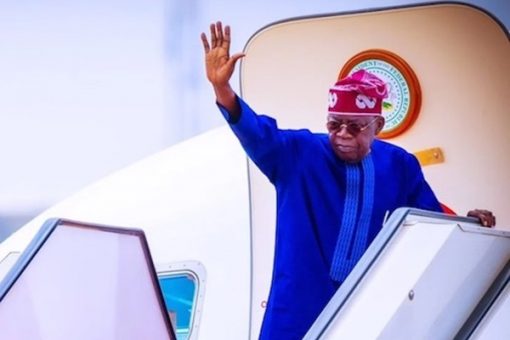
UMUAHIA – Former Minister of State for Science and Technology and the Abia State Renewed Hope Ambassador, Chief Henry Ikoh, has said that far-reaching economic reforms introduced by President Bola Ahmed Tinubu have ended the era when state governments borrowed to pay workers’ salaries.
Speaking exclusively with Vanguard, Ikoh said states now receive significantly higher monthly allocations, enabling them to meet salary obligations and fund development projects without resorting to loans.
According to him, federation allocations to states have increased nearly fourfold following the removal of fuel subsidy, a development he said deserved commendation for the President.
Ads by
“Before now, many states were practically bankrupt and had to borrow just to pay salaries. Today, that is no longer the case. States now have enough funds to run their affairs effectively,” he said.
Ikoh noted that the President’s reforms were yielding tangible dividends across the country.

“Mr President’s reforms are working. States now have more funds. Governors no longer borrow to pay salaries. Workers are paid as and when due, contractors are being settled, and salaries have improved because money is available,” he said.
He added that Nigeria was steadily transitioning from a consumption-driven economy to a productive one.

“There is fuel everywhere, no more queues. The dollar has stabilised. We no longer have multiple exchange rates. Unfortunately, many people refuse to give Mr President credit for these gains,” Ikoh lamented.
Responding to arguments that federal allocations were constitutional entitlements rather than presidential benevolence, Ikoh said Tinubu deserved credit for the political will to implement reforms that expanded the distributable pool.

“The President could have chosen a different path, as we saw in the past. But he took bold decisions that strengthened states financially,” he argued.
Ikoh criticised opposition figures and critics of Tinubu’s administration, accusing them of focusing solely on perceived shortcomings while ignoring visible achievements.
“Why is the opposition refusing to acknowledge these gains? They only see what is wrong. They must rethink and applaud the President for his landmark achievements,” he said.
On speculations about his governorship ambition, Ikoh said his immediate priority was mobilising support for Tinubu and the All Progressives Congress (APC) ahead of the 2027 elections.
“My core mandate as Renewed Hope Ambassador is to deliver President Tinubu in Abia State in 2027. We have structures and we are engaging the grassroots,” he said.
He dismissed claims that Tinubu and the APC were unpopular in the South-East, insisting that the President’s acceptance in the zone is steadily growing.
“Tinubu is becoming more acceptable in Abia and across the South-East. His inclusive style of governance and appointments of South-East indigenes have endeared him to the Igbo,” Ikoh said, expressing optimism that it would translate into electoral victory.
While acknowledging the efforts of Abia State Governor Alex Otti to transform Abia, Ikoh said the state could achieve full industrialisation under his leadership if given the opportunity.
“Otti is trying and there is visible progress. People are urging me to run and I’m still consulting. But if I decide to run in 2027 and I am given the mandate, Abia will be fully industrialised. We will create wealth, grow the middle class, guarantee welfare and security. That is the essence of governance,” he said.
Electoral Act, defections, APC unity
Ikoh also defended the controversial provisions of the amended Electoral Act, dismissing claims that its speedy assent signalled fear of credible elections by the APC.
“How can a party controlling 30 out of 36 states be afraid of elections? Who exactly is APC afraid of?” he asked.
He explained that provisions allowing manual transmission of results where electronic facilities were unavailable were designed to prevent voter disenfranchisement.
On defections of Governors to the ruling party, Ikoh denied allegations of coercion.
“No governor is being forced to join APC. They are joining because they see progress, stability, and access to resources. They are no longer borrowing to pay salaries,” he said.
He also rejected claims that the APC in Abia was factionalised, insisting the party was united and poised to take over the state.
Ikoh urged Ndigbo to support Tinubu in 2027, saying it would strengthen their chances of receiving reciprocal support from the South-West when it would be their turn to produce the President.