ABEOKUTA – Former President Olusegun Obasanjo has identified poor leadership as the greatest obstacle to Africa’s development, urging young people across the continent to embrace integrity, discipline, honesty and visionary leadership.
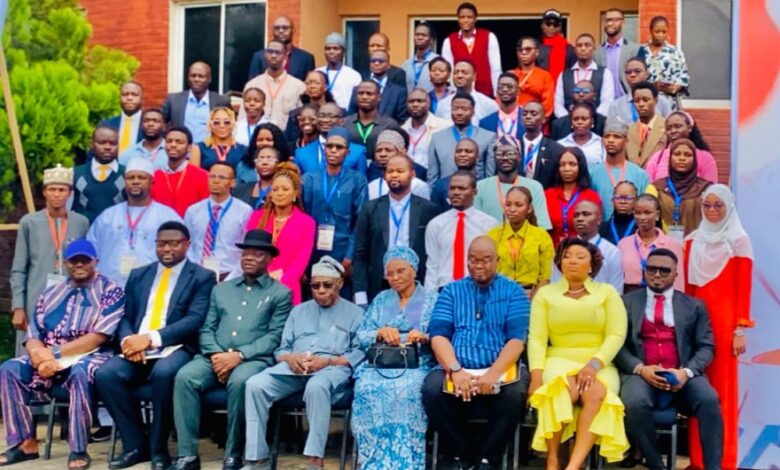
Obasanjo stated this while addressing participants at the seventh edition of the Presidential Youth Mentorship Retreat (PYMR) and the 12th edition of the Youth Governance Dialogue (YGD), held under the theme, “African Youth and Renaissance.”
The former president, who reflected on his decades of experience in military and civilian leadership, said his encounters with different categories of leaders, experiences in government, farming and imprisonment had shaped his understanding of effective leadership.
He described his imprisonment as one of the most valuable experiences of his life, saying the lessons he acquired during the period were priceless.

“The lessons I learned in prison, I couldn’t buy with all the money in the world. I had to go through that process to learn that lesson,” he said.
Obasanjo, who served as military Head of State and later as an elected civilian president, said the 20-year period between his two tenures in government provided him with opportunities to interact with influential political, diplomatic and military leaders across the world.

He explained that the experiences informed what he described as the 55+20 Leadership Framework, comprising 55 leadership attributes and 20 values.
According to him, leadership remains the major challenge confronting Africa, not only at the political level but also across other sectors of society.

“If you ask me what one issue is the bane of our bad progress or lack of progress in Africa, it is leadership. Not only at the political level, although the political level matters because politics is the master, but at every level,” he said.
Highlighting some of the attributes and values in his leadership framework, Obasanjo identified vision, accommodation, dependability, gratitude, honesty, knowledge and truth as essential qualities of effective leadership.
He described a visionary leader as someone who sees possibilities beyond existing realities, articulates a compelling picture of a better future and inspires others to pursue transformative goals.
On accommodation, he urged emerging leaders to be flexible and receptive to other people’s opinions, stressing that leadership should not be about imposing one’s views on others.
He also emphasised dependability, saying leaders must fulfil their promises and remain committed to their responsibilities despite challenges.
Speaking on gratitude, the former president drew from Yoruba cultural values to explain the importance of appreciating acts of kindness, while describing honesty as the willingness to speak and act truthfully, admit mistakes and acknowledge what one does not know.
He further stressed that knowledge should go beyond acquiring information to understanding how to apply it effectively.
On truth, Obasanjo criticised what he described as deception among contemporary political leaders, saying leadership must be built on reality rather than falsehood.
He, however, acknowledged that nobody could attain perfection but maintained that the leadership qualities outlined in his framework were achievable.
Also speaking at the programme, one of the mentor, Dr Ayodele Aderinwala urged young leaders not to loose focus on their objectives.
“Leadership is not a popularity contest. Let them hate, so far as they obey. The critical issue here is to learn to keep focus on your objective. Don’t be distracted, don’t be sidetracked,” he said.
Earlier, the Chairperson of the Youth Development Centre, Bisi Kolapo, said the Presidential Youth Mentorship Retreat was established following Obasanjo’s desire to share his leadership experiences with younger generations and provide them with guidance to navigate life and leadership challenges.
Kolapo explained that the retreat, which had entered its seventh edition, initially brought together young people from Nigeria’s 36 states, with participants required to reside in their respective states of origin.
She said the initiative was subsequently expanded to accommodate participants from other African countries following growing interest in the programme.
According to her, the current edition attracted participants from Tanzania, Uganda, Kenya, Sierra Leone and Cameroon, among others.
She said Obasanjo’s intention was to provide young people with access to experienced mentors who genuinely had their interests at heart.
“Baba just woke up one day and called me. He said, ‘I want to pour out. I want to let these people know what I know,’” Kolapo recalled.
She advised young people to believe in themselves, make deliberate efforts towards achieving their ambitions and recognise the importance of divine assistance.
Kolapo also highlighted some of the Youth Development Centre’s interventions, including back-to-school initiatives, technology training, vocational skills development and access to loans.
She disclosed that the centre provided beneficiaries with loans of up to N1m at nine per cent interest, repayable within one year, explaining that the initiative was designed to encourage discipline and entrepreneurship rather than dependency on grants.
Similarly, the Programmes Manager of the Youth Development Centre, Kehinde Blessing Omolara said the mentorship initiative had physically trained about 700 young people over seven years, while its global engagement reached approximately two million people through diaspora participation as of the previous year.
Omolara said the programme was designed to change young people’s perception of leadership, particularly the tendency to associate leadership with political positions, power and personal benefits.
She stressed that leadership should be measured by contributions to society rather than the positions individuals occupy.
“It’s easy for everyone to say they want to be a leader, but looking at what we have out there, a lot of people are excited by price, by position, and not motivated by action,” she said.
She added, “You can be a leader, but you can’t be a leader to your pockets; you have to be a leader to your people.”
According to her, the programme had produced young people who had ventured into governance, entrepreneurship and employment generation, while some had changed their career aspirations after interacting with experienced mentors.
She described the initiative as a platform for mindset re-engineering, adding that leadership could begin with teaching others, demonstrating integrity, doing the right thing and participating actively in civic responsibilities, including voting.
Omolara urged young people not to wait for government or established leaders to solve every problem confronting their communities.
“The future is not long; it’s now. Whatever we plant now is what we’re going to have as the future,” she said.
She charged the participants to uphold integrity, contribute meaningfully to their communities and take responsibility for shaping the future they desire.