ABEOKUTA – As the quest for Ogun West governorship candidacy grows, an advocacy group, She Leads Advocates has renewed calls for greater inclusion of women in top political offices, urging that female deputy governors across the country be given fair consideration for governorship positions.
The group maintained that women who have served in deputy governorship roles are well-equipped for higher leadership, citing their experience in governance, policy execution, and administrative coordination.
According to the advocates, the women have moved beyond symbolic representation and is actively contributing to decision-making at the highest levels of state government.
The renewed push comes amid growing national attention on a new wave of female political figures gaining prominence within party structures, particularly within the All Progressives Congress (APC).
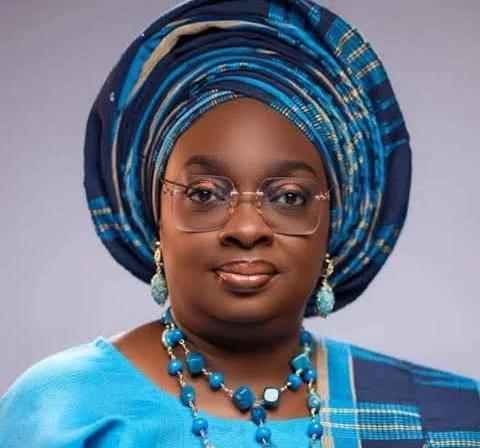
One of the leading figures in this conversation is Ogun State Deputy Governor, Noimot Salako-Oyedele, whose political profile continues to rise.

According to the group, Salako-Oyedele, with a background in engineering and public administration, has been recognized for her structured leadership style and policy-driven approach.
Observers noted that her emergence is also fueling discussions around regional balance within Ogun State, particularly as she hails from Ogun West.

Across other states, similar examples reinforce the group’s argument. In Adamawa, Deputy Governor Kaletapwa George Farauta has gained recognition for her academic and administrative contributions. In Imo State, Chinyere Ekomaru has continued to build grassroots influence, while Kaduna’s Hadiza Sabuwa Balarabe remains notable for her role in public health and governance.
She Leads Advocates argued that these women represent a growing pool of capable leaders whose experience should position them as natural successors in their respective states.

The group insisted that succession planning within political parties should increasingly reflect competence and performance rather than entrenched political norms.
Ogun State, in particular, is emerging as a focal point in this evolving national discourse. Alongside Salako-Oyedele, other prominent female figures are gaining attention.
These include Modele Sarafa-Yusuf, known for her background in journalism and public communication, and Iyabo Obasanjo-Bello, who brings administrative experience and political influence.
Political analysts say the developments point to a gradual shift in Nigeria’s political landscape, where leadership considerations are increasingly shaped by track records and measurable outcomes rather than traditional expectations.
Ogun State’s history of political inclusivity, spanning regional and religious lines has also contributed to the growing acceptance of diverse leadership options. While identity factors remain part of the broader conversation, emphasis is steadily shifting toward fairness, competence, and unity.
She Leads Advocates continues to stress that deputy governors, particularly women, should not be sidelined in the transition of power.
With political alignments gradually taking shape ahead of 2027, attention is turning to which of these emerging female leaders will secure the opportunity to contest at the highest level.
For Ogun State and Nigeria at large, the next electoral cycle could mark a significant turning point, one defined by a convergence of advocacy, opportunity, and tested leadership.