Ogun State is Nigeria’s greatest economic irony: the landlord who owns the house but sleeps in the boys’ quarters.
On paper, the Gateway State reads like an investor’s prayer. It warehouses over 3,500 industries across six clusters stretching from Agbara to Sagamu. The Agbara Estate alone, at 8,000 hectares, is the largest industrial footprint in sub-Saharan Africa – a city within a city that houses the Ogun-Guangdong Free Trade Zone, where forty-four factories and six thousand workers move over a hundred thousand metric tons of freight every day. Between 2014 and 2017, when manufacturers were fleeing the country, Ogun quietly absorbed 74.4 per cent of all manufacturing investments that entered Nigeria, outstripping Lagos, long regarded as the nation’s economic capital.
The figures since then have only grown more audacious. From an economy valued at ₦3.5 trillion in 2019, Ogun is projected to reach ₦18.96 trillion by 2026. Its Internally Generated Revenue has climbed from a modest ₦50 billion in 2020 to ₦252.36 billion in 2025, placing it among Nigeria’s three most viable states. PAYE alone contributes ₦70.37 billion, while Ministries, Departments and Agencies account for another ₦141 billion. It sits atop the nation’s largest limestone belt, producing 14 million of Nigeria’s 28.6 million metric tons of cement. It is the only state in the federation linked simultaneously by road, rail, water and air. And yet, for all this endowment, the wealth does not sleep at home.
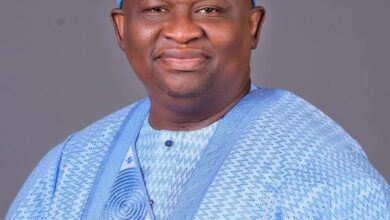
This is the Lagos Shadow Economy at work. The factory is in Ota, but the tax file is on Victoria Island. The truck is loaded in Igbesa, but the value-added tax is captured in Ikeja. The chief executive lives in Lekki, commutes to Agbara, and remits his PAYE to Lagos State. Ogun has perfected the art of production without capture, of industry without headquarters, of potential without prosperity. It is this paradox that informed Senator Solomon Olamilekan Adeola’s ITESIWAJU agenda.
For those unfamiliar, ITESIWAJU is a nine-point development blueprint for Ogun State. The word “Itesiwaju” in Yoruba simply means progress. Adeola has turned it into an acronym, each letter standing for a pillar of reform: I – Infrastructure, T – Tourism and Culture, E – Economic Empowerment, S – Security and Welfare, I – Inclusive Growth, W – Women, Youth and Poverty Eradication, A – Agriculture and Food Security, J – Job Creation and Industrialisation, U – Urbanisation and Transparency. In essence, the agenda is designed to stop Ogun from being the factory floor that feeds Lagos while remaining underdeveloped itself. It aims to capture value where it is created, by retaining headquarters, taxes and jobs within Ogun, while simultaneously modernising transport, culture, agriculture and governance. Adeola’s unveiling of the agenda in Abeokuta last week must therefore be read not as another campaign pamphlet but as the first deliberate attempt to plug the leakage.

In marketing communication theory, plausibility is not built by promise but by proof of mechanism. The consumer does not buy a benefit; he buys the reason to believe the benefit. Adeola’s document, crafted over three years of stakeholder consultations, understands this instinctively. It does not merely promise progress; it dissects how progress will be captured.
Consider infrastructure, which in Ogun has for too long meant kilometres of tarred road photographed for billboards. The ITESIWAJU proposition reframes it as a connectivity dividend. Beyond the 1,600 kilometres already delivered by the incumbent administration, what is proposed is a formal transit economy: a Bus Mass Transit system with structured terminals linking Abeokuta, Ota, Sagamu and Ijebu; a Kajola Inland Dry Port riding on the Lagos-Ibadan standard gauge, capable of handling 100,000 TEUs annually and freeing the Lagos port corridor; and, most ingeniously, OgunRide, a state-backed mobility platform that seeks to formalise the ubiquitous keke, okada and danfo operators with vehicle financing, health insurance and pension. In a state where nearly six in ten workers survive in informal transport, that is not a transport policy – it is a tax net woven from the streets themselves, turning daily hustle into measurable wealth.

The same logic travels to culture. Olumo Rock, that timeless monolith, attracts over 30,000 visitors a year yet returns less than ₦50 million to government coffers. The festivals that define Yoruba pageantry—Ojude Oba, Lisabi, Oronna—are watched on Instagram reels shot in London. The Adire that sells for thousands in Lagos boutiques is dyed in Itoku. ITESIWAJU proposes to repatriate that value. Through a digital tourism portal, water transport revival to the creeks of Ogun Waterside, Tongeji and the latent Olokola deep-sea corridor, and a conscious packaging of film, fashion and Fuji as intellectual property, tourism ceases to be nostalgia. It becomes a visitor economy.
But the masterstroke, and the true test of plausibility, lies in what marketers call the single-minded proposition: the headquarters strategy. Ogun is Nigeria’s education capital, with the highest concentration of tertiary institutions, yet graduate unemployment hovers around 34 per cent because the best jobs attached to its industries are domiciled elsewhere. Adeola proposes a simple, if politically delicate, legislative correction. If you manufacture in Ogun, your regional headquarters must reside in Ogun. If you operate an industrial estate in Ogun, a defined quota of middle-management and technical roles must be reserved for Ogun indigenes. It is the same local content logic that built Port Harcourt’s oil economy, now applied to Sagamu and Agbara.

When British Battery Recycling commits five million dollars through OgunInvest, the question is no longer how many casual jobs were created, but how much PAYE will now be captured in Abeokuta rather than Alausa. That single shift, if enforced, moves Ogun’s IGR from its current ₦252 billion towards its stated ambition of ₦512 billion by 2027—not by raising taxes but by retaining them.
None of this works without the invisible infrastructure of trust. Capital, like water, flows away from chaos. Kidnapping on the Sagamu-Benin corridor and persistent farmer-herder tensions in Imeko-Afon have made night logistics a gamble. ITESIWAJU treats security not as a slogan but as an investor guarantee, proposing forest guards, technology-driven surveillance and a strengthened integration with Amotekun. Similarly, inclusive health insurance, tied to the formalisation of informal operators, becomes not a welfare gesture but a retention strategy. No executive will relocate his family to a state where a medical emergency requires a dash to Lagos.
In agriculture, the metaphor is equally clear. With over 16,000 square kilometres of arable land, Ogun has spent decades trying to feed itself while sitting next to the largest food market in Africa. The agenda shifts from subsistence farming to clustered, mechanised production for cassava, rice and poultry, linked directly to offtakers in Flowergate and Agbara industrial zones. It is how you simultaneously tame a 30 per cent food inflation rate and create rural jobs that keep young people from boarding a night bus to Lagos.
Even urbanisation is reimagined. Instead of allowing the Lagos-Ibadan corridor to sprawl into unplanned slums, ITESIWAJU envisages planned new towns and genuine local government autonomy with direct funding for all twenty councils. The example of IPIN City in Obafemi-Owode, where a plot that sold for ₦2.5 million is projected to reach ₦10 million by 2027 on the back of industrial pressure, shows that land value capture, if planned, can fund development.
What, then, does four years portend if this document is more than paper? It portends a fundamental reversal of a fifty-year-old economic habit. A state that finally learns to collect where it plants. A state where a young graduate in Sagamu no longer needs to falsify his address to read as Ikeja to get an interview. Where transport is not a daily lottery but a social safety net. Where progress is not measured in kilometres of road commissioned but in headquarters relocated, PAYE retained and factories upgraded into ecosystems.
Ogun does not need another hymn about its potential. Potential has been its most convenient alibi for half a century. What it needs is a system that turns proximity to Lagos from a wound into a weapon, from leakage into leverage. On paper, ITESIWAJU is that weapon. The question that will define the next four years is whether Ogun will finally have the political discipline to wield it.
Dr. Somorin writes from Crescent University, Abeokuta