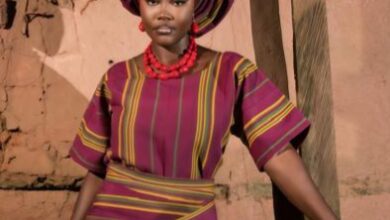
Kidbaby Opens Up on Financial Struggles, Reveals How Bar Job Paid Her HND Fees

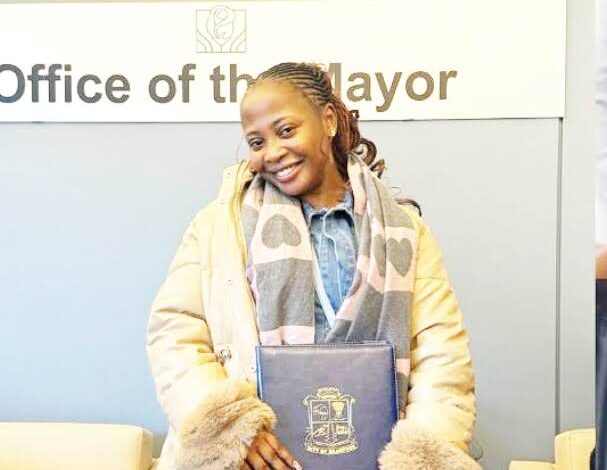
LAGOS – Popular TikToker and actress Salman Aliyat Olamide, better known as Kidbaby, has revealed how she took up a job in a bar to raise funds for her Higher National Diploma (HND) education, following a family setback that plunged her into financial hardship.
The actress made the revelation during an interview on Barricades Live with Adewunmi on Thursday, where she recounted the personal sacrifices, family challenges and determination that shaped her journey.
The programme, hosted by popular TikToker Wunmi Star, explored the untold experiences and struggles behind the public lives of Nigerian celebrities.
She explained that what began as a comfortable childhood took a different turn following a tragic incident that changed her family’s fortunes, forcing her to confront the realities of life at an early age.

“I was born into a very educated and Islamic household. Growing up was not very easy for me because we lost a lot when my dad was involved in a serious accident back in 2010. At that point, everything changed,” she recalled.
She said life had been relatively comfortable before the accident.

The popular actress noted that she had attended what she described as a “big school” and enjoyed the privileges that came with her family’s financial stability. However, the accident disrupted the family’s way of life, bringing unexpected difficulties and forcing them to adjust to a new reality.
“We used to be rich and comfortable. At least, I attended a ‘big school,’ and everything was fine. But all of a sudden, my dad got involved in that accident, and everything changed. It was a very difficult time for us,” she said.

For the now-popular actress and social media celebrity, her determination was put to the test in 2022 when she struggled to raise money for her Higher National Diploma programme.
“Back in 2022, I was struggling to raise money for my HND programme, so I worked in a bar to finance my education,” she disclosed.
Aside from her educational and financial struggles, Kidbabay also shared an interesting account of her relationship with her grandmother, revealing how differences in language and lifestyle once shaped her perception of her.
“Before now, I didn’t like my grandma. I used to think she was a witch because she didn’t like us speaking English instead of Yoruba,” she said.
She further explained that her grandmother preferred the family to speak Yoruba rather than English, a position that sometimes clashed with her own preferences.
Her habit of eating with cutlery, which her grandmother also disapproved of, further contributed to the misunderstandings between them.
“Also, I preferred eating with cutlery, which she didn’t approve of. Because of these differences, we used to think she was a witch,” she added.
Today, her interests extend beyond the classroom and into the creative and digital space, where she sees opportunities for self-expression, storytelling and career development.
She describes the online industry as both lucrative and enjoyable, noting that several aspects of content creation come naturally to her.
“The online industry is lucrative and fun. Content creation, storytelling, filmmaking, and other creative activities come easily to me because they are already a part of who I am,” she said.
She further noted that creativity is not merely a skill acquired through training; it is something she believes has always been part of her identity.
She stressed that acting is a natural extension of herself and described the inspiration behind her creative work in spiritual terms.
“Acting is a part of me, and I get inspiration naturally, just as the Holy Spirit ministers to people,” she explained.
She also identified fashion as another area in which she expresses her creativity, emphasising that her interests are interconnected and reflect her personality.
“Everything I do, including fashion, comes naturally because these creative abilities are simply a part of me,” she said.
Beyond her creative pursuits, Kidbabay also holds a personal view about identity, belonging and the meaning of home.
While some identify their origins with the ancestral hometown of their fathers, she believes that the place where a person grows up can be just as important in shaping their identity.
“I don’t believe in the philosophy of claiming a place as your origin simply because that is where your father comes from. For me, I will always identify with the place where I grew up, and that place is Ijebu-Ode,” she stated.