LAGOS -A man who sleeps in some areas in Ifo local government and earns his living in Lagos gives the best hours of his day to the road. He leaves before dawn along stretches no one has promised to mend, and he returns after dark to a community that lacks many of the amenities that make a place feel like home. I actively lived in Ifo for almost twenty-two years. It watched me grow, taught me the price of patience, and it is the place I still call home, so I write about it as a son writes about a parent who has been left unattended.
The facts of its importance are not in dispute. Ifo shares a boundary with Lagos, houses a large population of voters, and accommodates residents who work in both states. An industrial corridor along that boundary feeds the revenue of Ogun State, and it runs on into Ado-Odo/Ota, which is often described as the state’s cash cow. However, the communities that make this arrangement possible, Ibaragun, Ijoko, Agbado, Oluwo-Opeilu and Abule Ekun among them, are remembered when campaigns draw near and forgotten once a new government settles in. They are like a relative who is invited only when something needs funding.
Residents count some of the most dangerous roads in Ogun State among those across Ifo and Ado-Odo/Ota, and yet Ifo is rarely discussed. My own explanation is political geography. The Ogun Central senatorial district, which includes Ifo, is represented in the Senate by a politician from Odeda, and the outgoing member of the House of Representatives for Ifo/Ewekoro comes from Ewekoro. Neither fact is a charge against either man. Distance simply dilutes urgency, and an advocate who does not live among the potholes cannot easily speak for them. Walk into Oluwo-Opeilu and ask any ordinary resident who represents them at the National Assembly, and watch the pause that follows. A group arguing for zoning made the same point in numbers, claiming that Ifo has produced representatives for about twelve years in nearly three decades, while Ewekoro has held the seat for over sixteen.
Shakespeare understood this season. In Coriolanus, the proud general must put on the gown of humility and beg the citizens in the marketplace for their “voices”, meaning their votes, and Rome grants them only while its attention is on him. Politics in every country is fluent in that courtship, and the cold that follows it is just as familiar.
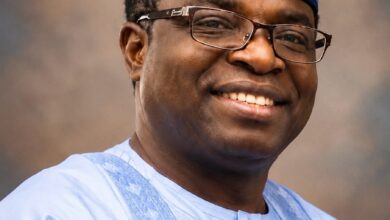
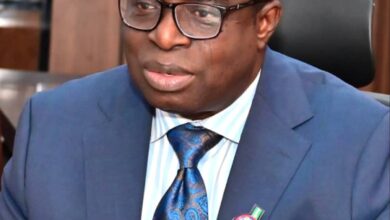
It is against this background that I welcome the emergence of Hon. Motunrayo Adijat Adeleye as the APC candidate for Ifo/Ewekoro. She served two terms in the Ogun State House of Assembly representing Ifo II between 2011 and 2019, and she later became the state’s Commissioner for Women Affairs and Social Development. That she is a woman is an additional gladness, since Nigeria’s legislative chambers still hold too few of them. That she comes from Ifo is the more practical fact, because supporters argued exactly that Ifo should have its turn at the seat. By the account of people who know her, she has walked the lanes of Agbado, Ibaragun, Oke-Aro and Lambe, so she knows where the shoe pinches.

There is a further reason a candidate from the soil matters. Constituents know her family, her street and her office, and she is the proverbial needle that carries its thread, traceable wherever she goes. If she falters, the people of Ifo will know whose door to knock on, and I doubt “non-functional” is a word her friends would apply to her. Proximity is a form of accountability that no distant representative can offer.
Her campaign framework carries the same intention. At the Ifo Town Hall on October 26, she unveiled the CARE Agenda, which stands for Constituency Advocacy, Access to Opportunities, Responsive Representation, and Empowerment and Engagement. Her stated priorities are amplifying constituents’ concerns in lawmaking, connecting residents to development opportunities, and widening citizens’ role in the process. It is a respectable list. A framework is not yet a road, though, and being a child of the soil proves only that she knows the problem. Only the ledger will show whether she can solve it.

I would therefore urge her to make the CARE agenda measurable and to be the first representative of this constituency to publish its books. Let every constituency project carry a public record of its cost, its contractor and its completion date. Let the ward-by-ward engagements her campaign promises continue after the campaign, with a report back to residents at least twice a year. Let her track the federal budget lines meant for Ifo and Ewekoro and tell the people what Abuja has approved and what it has released. A member of the House of Representatives cannot tar a state road, but she can press the state to do so, attract federal projects to the constituency, and keep the file open until the work is done. That is the practical meaning of advocacy, and it is an area where Ifo has gone unrepresented for too long.
What I say of her, I would say of any candidate. The seat should always be for a person with the clearest plan for the people on the road, and a candidacy should be judged by the promises it keeps, whichever party’s colours it wears. Voters in Ifo and Ewekoro have waited long enough to demand that standard, and they should apply it to Hon. Adeleye as firmly as to anyone else. If she meets it, she will have done something her predecessors in distance could not.

A constituency that shares a boundary with Lagos cannot afford to live in shadows and shame. For the man who sleeps in Ifo and earns in Lagos, the border should mark the place where the roads improve. Ifo has been visited often enough. What it has lacked is a neighbour who stays when the campaign convoys leave.
Folorunso Fatai Adisa is a communication strategist and columnist. He holds a Master’s degree in Media and Communication from the University of Strathclyde, Glasgow, United Kingdom.
Email: Folorunsofatai03@gmail.com