INEC Raises Fresh Alarm Over Poor State Of Facilities At PUs, Collation Centres
...Urges govs to ensure school facilities benefit from dividends of democracy

ABUJA – The Independent National Electoral Commission (INEC) has expressed fresh concern about the poor state of facilities at most of its Polling Units (PUs) and Ward Collation Centres (WCCs) nationwide.
The electoral umpire equally lamented that the poor facilities at the centres and PUs mostly located in public buildings like the state primary and secondary schools, were making life unbearable for its ad hoc staff, especially the National Youth Service Corps (NYSC) members during elections.
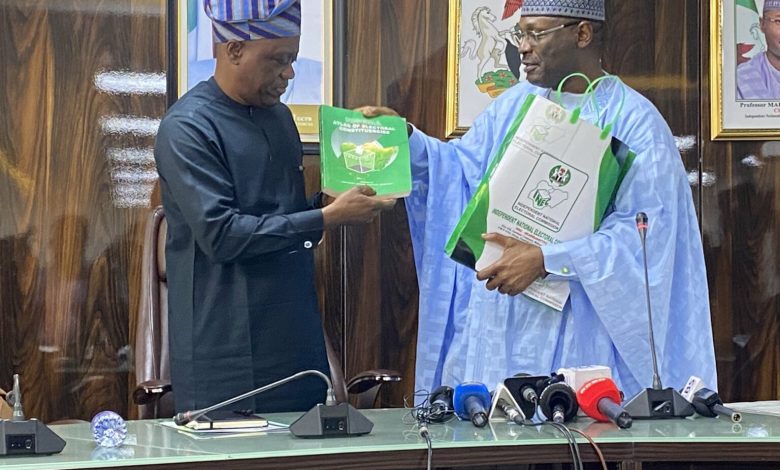
Chairman of the commission, Mahmood Yakubu, raised the fresh alarm when he hosted the Statistician-General of the Federation and the National Bureau of Statistics (NBS), in Abuja, yesterday.
He specifically explained that the corps members and the groups representing the community of persons with disability, had repeatedly appealed to the commission over the years, to improve the poor facilities by providing electricity and water for the ad hoc staff.
In his opening remarks,Yakubu urged the NBS to add the concerns to the statistics on the state of public facilities that they periodically publish, and more importantly, in their engagement with constitutional bodies, such as the National Economic Council (NEC) in which all state governors in Nigeria are members. He equally appealed to the state governors to ensure that the facilities, which train youths at the foundation and intermediate levels of the education system are beneficiaries of the widely proclaimed dividends of democracy. Yakubu said: “Most of our PUs and Ward Collation Centres nationwide are located in public buildings, majority of them in state primary and secondary schools.

“Over the years, stakeholders, especially the NYSC and groups representing the community of persons with disability, have appealed to the commission to improve these facilities by providing electricity and water for ad hoc staff, as well as access to facilities, such as ramps for citizens with special needs during elections and electoral activities, such as voter registration.
“We urge the NBS to add these concerns to the statistics on the state of public facilities that you periodically publish and in your engagement with constitutional bodies, such as the NEC in which all state governors in Nigeria are members.

“Let these facilities which train our youths at the foundation and intermediate levels of the education system be beneficiaries of the widely proclaimed dividends of democracy,” he appealed.
On his part, the Statistician-General, Prince Adeyemi Adeniran, had earlier outlined the broad mandate of the NBS, explaining that beyond producing official statistics, the Bureau coordinates Nigeria’s vast statistical system, regarded as the largest in Africa.

According to him, it includes state statistical agencies, planning and research departments in ministries, departments and agencies, as well as tertiary institutions offering statistical studies.
The Statistician-General emphasised the importance of accessing INEC’s data sets, describing them as “very vital” for planning. He described the visit as part of efforts to explore how both institutions could align their resources to serve citizens more effectively.
“We believe that if we can work with INEC to make this data usable and accessible, it will strengthen planning by governments, businesses and development partners,” Adeniran said.