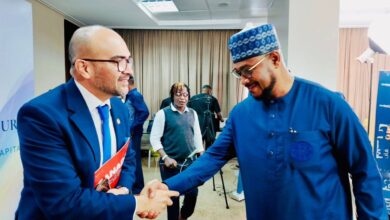
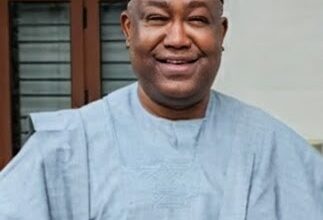
FORMER Nigerian President and Chairman of the Intra-African Trade Fair (IATF) Advisory Council, Olusegun Obasanjo, has called on African countries to prioritise homegrown solutions as the foundation of their development and prosperity, warning that continued reliance on external institutions will only perpetuate dependency.
Obasanjo, speaking during a fireside chat at the ongoing 4th IATF in Algiers, Algeria, said global institutions such as the World Bank, International Monetary Fund (IMF), and even the United Nations were not designed with Africa in mind and therefore cannot be the drivers of the continent’s long-term progress.
“The World Bank, IMF, the United Nations, even the WHO, these institutions were established before most African countries gained independence. They were not designed for us,” he said.
The former president stressed that Africa must stop outsourcing its development, noting that the continent’s history of dependence on external economic and political frameworks has entrenched structural inequalities.
He recalled a revealing moment during his time with the InterAction Council, a forum of former heads of state, where he questioned the fairness of global capitalism. “I was told bluntly: ‘We created capitalism for ourselves, not for you. Humanity is not a factor in economics.’ That is the reality of the world we live in. We must learn to engage it as it is, not as we wish it to be,” Obasanjo said.
According to Obasanjo, Africa remains trapped in an exploitative system where it supplies raw materials and imports finished goods at high cost.
He illustrated this imbalance with the example of cocoa.

“They buy our cocoa at N100, take it to Hamburg, turn it into chocolate, and sell it back to us at N1000. That’s not trade, that’s extraction,” he remarked.
On globalisation, he accused developed economies of double standards: “They say open your borders. But they keep theirs closed. They take from you and sell back to you. That’s not globalisation; that’s exploitation.”

Obasanjo emphasised that the African Continental Free Trade Area (AfCFTA) and platforms like the IATF provide opportunities for the continent to correct these imbalances, expand intra-African trade, and create stronger regional value chains.
Citing Uganda’s annual milk production of 5.5 billion litres, he questioned why Nigeria, Africa’s most populous country was not a key market, while faraway Bulgaria benefited instead. “That is what IATF and AfCFTA aim to correct: sharing information, collaborating, and building African trade from within,” he said.
He added that Africa’s growth lies in harnessing its vast resources, building regional institutions, and strengthening cooperation across borders.
Obasanjo urged African leaders, businesses, and institutions to move beyond rhetoric and embrace a new development mindset rooted in self-reliance, innovation, and collaboration.
“Africa’s path to development lies within its own borders. We must prioritise African solutions, African partnerships, and African prosperity. We cannot outsource our development any longer,” he declared.
The IATF, jointly organised by Afreximbank, the African Union Commission, and the AfCFTA Secretariat, has become a leading platform for advancing intra-African trade and investment. This year’s edition in Algiers has drawn policymakers, business leaders, and investors from across the continent, all focused on unlocking Africa’s economic potential through integration.
For Obasanjo, the message is clear: Africa can no longer wait for external actors to define its path. The continent must chart its own future by leveraging homegrown solutions, fostering collaboration, and creating prosperity on its own terms.