Segun Showunmi Raises Concerns Over Political Future, Power Balance At Lisabi Day 2026

ABEOKUTA — Prominent Egba voices have called for renewed political clarity, equity, and development in Ogun State as part of reflections marking the 2026 Lisabi Day celebration in honour of Lisabi Agbongbo Akala.
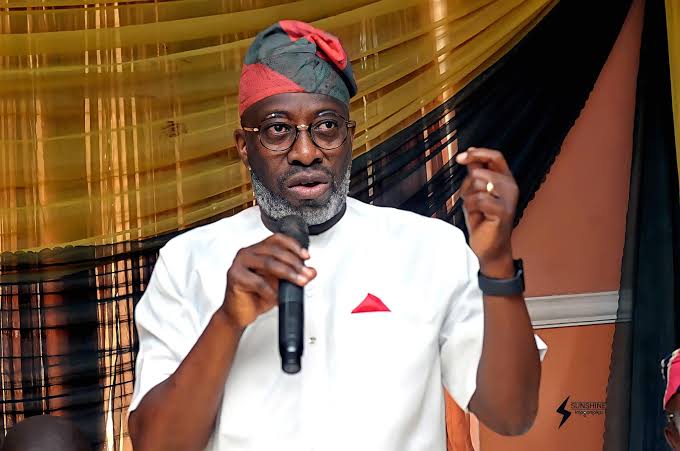
In a strongly worded press release to commemorate the annual cultural event, Otunba Segun Showunmi emphasized the need for the Egba people to reassess their political position and define their interests ahead of the 2027 governorship race.
The Odofin Keesi Egbaland highlighted what he described as a longstanding tradition of balance among the state’s major blocs, Egba, Ijebu/Remo, and Yewa/Awori, warning that any disruption to this arrangement could threaten stability.
According to Showunmi, proposals suggesting an extended hold on governorship power by interests linked to Iperu are “politically untenable” and risk undermining the principle of equity that has historically sustained Ogun State.
He also raised concerns over recent traditional and political developments, including actions associated with Oba Kehinde Olugbenle, which he said appear to sideline established Egba institutions.

He warned that such shifts could be interpreted as attempts to marginalize Egba influence in both primary and secondary positions of power within the state.
“Cooperation must never be mistaken for weakness,” Otunba Showunmi noted, stressing that inclusion should not come at the expense of dignity.

Beyond political concerns, Showunmi pointed to what he described as developmental stagnation across key Egba areas, including Abeokuta North and South, Odeda, Obafemi Owode, Ifo, and Ewekoro.
He cited neglected infrastructure projects such as the Ewekoro airstrip and incomplete civic developments in Abeokuta as evidence of systemic neglect.

He also criticized land allocation practices in parts of Abeokuta, warning of long-term ethical and generational consequences.
On economic and educational development, Showunmi called for greater investment in institutions such as the University of Medicine, arguing that Egbaland deserves growth that reflects its population and historical contributions.
At the national level, the Egba leader noted that the role of President Bola Ahmed Tinubu who holds the traditional title of Areago of Egbaland would be closely watched.
He stressed that consultation with Egba stakeholders is essential in determining the state’s political future.
“Political legitimacy in 2027 will be anchored on local consensus, not external imposition.
“The principle of power management, rooted in the sacrifices of our forebears, has always guided the balance that sustains Ogun State. From the old provincial structure where Egba once stood at the center alongside Ijebu and the territories stretching toward Mahin to the present configuration of Egba, Ijebu/Remo, and Yewa/Awori blocs, equity has been the stabilizing doctrine. That doctrine must not now be distorted.
“On the matter of 2027, it is neither rational nor just to contemplate a prolonged concentration of governorship power in Iperu. The suggestion that one locality could hold sway for an extended 16-year stretch is politically untenable and strategically dismissive of the delicate balance that has preserved peace across Ogun State.
“Equally concerning is the signal sent by recent traditional realignments, particularly actions associated with figures such as Oba Kehinde Olugbenle, which appear to bypass established Egba institutions. Such moves, especially in the context of a transitioning Ijebu traditional structure following the passing of Oba Sikiru Adetona, risk being interpreted as part of a broader pattern to sideline Egba influence in both the first and second positions of power in the state.
“This is unacceptable. Cooperation must never be mistaken for weakness, and inclusion must never come at the cost of dignity.
“Internally, we must also confront the developmental stagnation within Egba divisions Abeokuta North and South, Odeda, Obafemi Owode, Ifo, and Ewekoro. Critical infrastructure remains underdeveloped or abandoned, from the neglected Ewekoro airstrip project to the incomplete civic and cultural assets in Abeokuta. Land allocation practices, particularly in areas like Ibara GRA, raise serious ethical and generational concerns.
“These are not merely administrative lapses; they are strategic failures that weaken our collective standing.”