Again, FG rejects CPC tag as Falana dismisses Trump’s genocide claim

ABUJA – The Federal Government has again dismissed Nigeria’s designation by the United States as a Country of Particular Concern (CPC) over alleged religious persecution.
It insisted that insecurity in the country is driven by socio-economic and regional factors, not religion, and affirmed its secular constitution and ongoing military gains under President Tinubu.
This was disclosed at separate briefings in Abuja yesterday through the Ministries of Information and Foreign Affairs. Minister of Information, Mohammed Idris, said the administration of President Bola Ahmed Tinubu has demonstrated a strong commitment to addressing insurgency and insecurity across the country. He noted that the government’s record of neutralising terrorists, rescuing hostages, and securing communities clearly contradicts the narrative of religious persecution being pushed abroad.
“The government is well apprised of the level of anxiety created by the designation of our country as a country of particular concern by the US government and threats of military invasion by President Donald Trump, following a wrong perception and misrepresentation of the security challenges in our country,” Idris said at a media conference in Abuja.
He described terrorism in Nigeria as a longstanding problem since the emergence of Boko Haram in 2009, but one that affects both Christians and Muslims. “Nigeria faces longstanding security challenges that have impacted Christians and Muslims alike, and we mourn every loss of life, knowing that even a single loss of life is one too many,” he said.
The Minister said President Tinubu’s administration has taken decisive steps to strengthen national defence, citing the recent change in Service Chiefs and the restructuring of the Armed Forces as part of efforts to inject “fresh energy, innovation, and accountability” into the nation’s security architecture.
Listing recent military gains, Idris disclosed: “In the past eight months, the Nigerian military neutralised over 592 terrorists in Borno State alone. Over 13,500 terrorists and armed criminals have been neutralised. More than 17,000 arrests made. Over 11,200 hostages freed. More importantly, over 124,000 insurgents and their families surrendered, handing over more than 11,000 weapons.
“In the North-West, especially Zamfara and Kaduna, 11,250 hostages have been freed, and some of the terror leaders, Ali Kachala, Boderi, Halilu Sububu, have been neutralised. In August, the military intercepted and killed, in one fell swoop, over 400 armed bandits who had converged to attack a village in Zamfara.
“Our military and other security agencies are winning the war on terrorism, and the results in the past years, especially under President Tinubu’s leadership, are real and remarkable,” Idris said, insisting that “the menace of terrorism in Nigeria does not exclusively target any religious or ethnic group. Extremism is mindless: blind to religion, tribe, or class.”
He attributed the rise in terrorism across West Africa to the collapse of Libya over a decade ago, which flooded the region with illegal weapons and extremist fighters. He also identified climate change and desertification as major factors fuelling the farmers-herders crisis in the North-Central region.
The Information Minister said Nigeria continues to seek stronger collaboration within ECOWAS, the African Union, and with international partners, including the United States, to stabilise the Sahel and disrupt terrorist networks. “We call on our American friends and partners to approach the Nigerian situation with an understanding of its complex realities; a vast, multi-ethnic, and multi-religious nation making significant strides in economic reform and strengthening its security architecture,” he added.
AT a briefing for members of the Diplomatic Corps at Tafawa Balewa House, the Permanent Secretary in the Ministry of Foreign Affairs, Dunoma Umar Ahmed, also faulted the CPC label, describing it as “a distortion of Nigeria’s secular democratic structure and long-standing record of religious coexistence.”
“The Nigerian state is secular in both structure and function. Christians and Muslims hold leadership positions across all levels. It is inaccurate to characterise our complex security challenges as manifestations of state-sanctioned religious intolerance,” Ahmed said.
He stressed that the 1999 Constitution guarantees freedom of religion and conscience, and that existing public-order laws apply equally to all citizens. “Recent external claims suggesting systemic religious persecution in Nigeria are unfounded. The CPC designation is fundamentally misinformed and does not reflect our record in protecting religious freedom,” he added.
Ahmed also used the occasion to highlight the Tinubu administration’s economic and governance reforms, noting that the removal of the fuel subsidy has saved over N4 trillion annually.
The funds, he said, are being channelled into social investment, education, and infrastructure through programmes such as the Infrastructure Support Fund (ISF), the Renewed Hope Conditional Cash Transfer Scheme, and targeted transport and food security initiatives.
He disclosed that crude oil production has increased to 1.6 million barrels per day, aided by renewed investor confidence and collaboration with international oil companies. The commencement of operations at the Dangote Refinery, coupled with the ongoing rehabilitation of the Port Harcourt, Warri, and Kaduna refineries, he said, will significantly reduce fuel import dependence and strengthen external reserves.
Reaffirming Nigeria’s commitment to energy transition and gas commercialisation, Ahmed said the implementation of the Petroleum Industry Act (PIA) has restored investor confidence and improved fiscal terms.
On security, he said sustained military operations such as Operation Hadin Kai and Operation Lake Sanity have degraded insurgent groups, reclaimed territories, and facilitated the return of displaced persons.
“Nigeria is a resilient and vibrant democracy confronting complex security challenges, not a state of religious persecution. Through our Constitution, courts, and security institutions, we remain the bulwark against sectarian violence and intolerance,” he said.
Ahmed also noted that interfaith harmony continues to be strengthened through institutions such as the Nigerian Inter-Religious Council (NIREC), the Christian Association of Nigeria (CAN), and the Supreme Council for Islamic Affairs (NSCIA).
Falana accuses Trump of lying about alleged Christian genocide in Nigeria
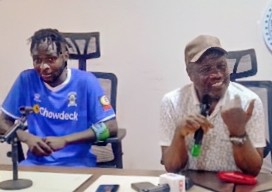
ALSO, human rights lawyer, Femi Falana (SAN), accused United States President Donald Trump of spreading falsehoods about a so-called “Christian genocide” in Nigeria, describing him as a leader driven by hostility towards Africa.
Speaking on Channels Television’s Politics Today yesterday, Falana dismissed Trump’s claim that thousands of Christians were being systematically killed in Nigeria, saying there was no credible evidence to support such an allegation. He argued that the violence in parts of the country stems from criminal and resource-based conflicts rather than religion.
“My position is that Mr Trump has lied to the whole world by alleging Christian genocide in Nigeria without any evidence to back it up,” Falana said. He added that the perpetrators of violence: terrorists, bandits, kidnappers, and armed robbers, were motivated by financial gain, not faith.
“The killers do not care about your religion. Many of them are only after ransom,” he said. The lawyer noted that in volatile regions such as Benue and Plateau states, clashes are linked to land and grazing disputes. “Those who are killing there are either killing to expropriate land or to feed their animals,” he said.
Falana advised the Federal Government not to overreact to Trump’s recent threat of military action against Nigeria but to focus on addressing its internal security challenges. “Instead of losing sleep over Trump’s statement, the government has a duty to look inwards; where have we made errors?” he stated.
He further alleged that Trump’s remarks reflect broader geopolitical interests aimed at controlling Africa’s resources. “I know him, I know his antics, I know his hatred for Africa. This matter is about the resources of our country. The same people pushing this debate are also saying, ‘let’s cut China to size in Africa.’ We must look at the geopolitical considerations and the errors made by our government in the past and present,” Falana added.
U.S. Senator Cruz vows to name Nigerian officials over alleged Christian persecution
RECALL that on Tuesday, United States Senator Ted Cruz pledged to reveal the identities of Nigerian government officials he claims are complicit in the killing of Christians across the country.
“I intend to be very explicit about who they are in the coming days and weeks,” he said. The Republican lawmaker announced through his official X handle, reiterating his determination to hold those he accuses of enabling or participating in religious persecution accountable.