Between Faith, Force, and Fragility: Confronting Nigeria’s Security Crisis with Clarity – Segun Showunmi

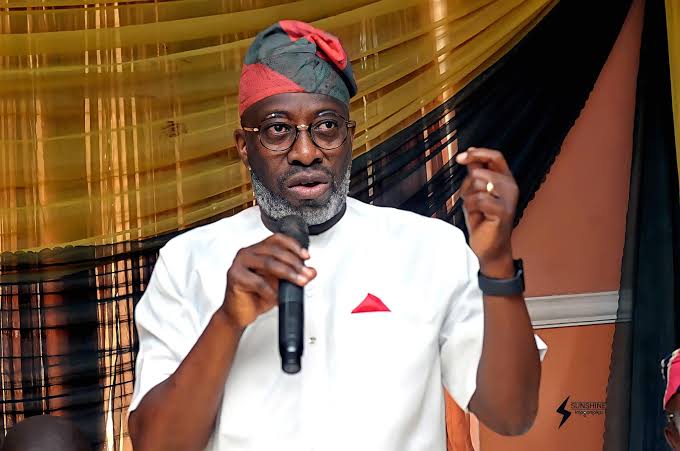
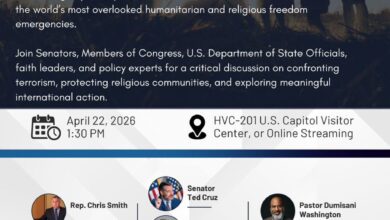
Today 22nd April 2026 at The Capitol Hill Forum On Terrorism and Religious Violence at the US Congress Washington USA.
Nigeria stands at a difficult intersection where faith, state authority, and deep structural fragility collide. The temptation, in moments like this, is to reach for easy explanations religion has failed, government is indifferent, or one region is to blame. All of these claims are emotionally satisfying; none of them is analytically sufficient.
The first error is to misunderstand religion itself. Traditions shaped by figures such as Jesus Christ and the Prophet Muhammad have, across history, produced both movements of peace and episodes of conflict. The decisive variable has never been the origin of the message, but its interpretation and use. What Nigeria confronts today is not the failure of faith, but the weaponization of belief the deliberate manipulation of religious identity by actors who seek power, grievance, or control. To frame the crisis as a theological breakdown is to miss its political and sociological core.
Yet the state cannot afford philosophical ambiguity. The primary obligation of any government is to maintain a monopoly over the legitimate use of force. Terrorism, unlike conventional warfare, rejects rules, protocols, and boundaries. It thrives on asymmetry, fear, and spectacle. In such an environment, the Nigerian state must act with firmness. But firmness alone is insufficient. A force that is not anchored in legitimacy perceived fairness, professionalism, and neutrality risks compounding the very instability it is meant to resolve.

This is where the conversation must shift from symptoms to structure. Nigeria’s insecurity is deeply entangled with long-standing economic and governance failures. Decades of corruption, policy inconsistency, and elite capture have produced vast pools of poverty, particularly in the northern regions. Where millions lack a credible pathway to dignity and livelihood, the opportunity cost of violence collapses. Extremist ideologies do not create this vacuum they exploit it. Any serious security doctrine must therefore integrate economic inclusion as a central pillar, not an afterthought.
Recent attempts to stabilize the foreign exchange regime and remove arbitrage distortions point in the right direction, but they also carry transitional pain. Populations already on the margins feel these shocks most acutely. Without parallel investments in social protection, education, and job creation, reforms risk deepening the grievances that insurgent actors are quick to harness.

Compounding these structural issues is a dangerous ecosystem of misinformation and tribal mistrust. In a country as diverse as Nigeria, narratives are not neutral they are instruments of power. Ethnic entrepreneurs and political opportunists manufacture claims, distort facts, and weaponize identity to mobilize support or discredit opponents. The result is a fragmented information space where truth is contested and accountability is diluted. In such an environment, even legitimate government action is easily recast as bias or persecution.
Democracy, which should serve as the stabilizing framework for managing Nigeria’s diversity, is itself under strain. The multi-party system an idea strongly associated with the global influence of the United States offers competition, representation, and choice. But these outcomes are not automatic. Where institutions are weak and parties function as vehicles for elite bargaining rather than ideological clarity, democracy can coexist with disorder. If insecurity continues to erode public trust, the risk is not just instability, but democratic regression.

There is, however, one area where clarity must be absolute: insurgencies do not sustain themselves without networks of support. Financing, logistics, intelligence leaks, and political protection are the lifeblood of organized violence. Nigeria must develop the capacity and the will to identify and sanction those enablers, regardless of status or influence. The era of impunity for “big men” who play both sides of the conflict must end. Anything less signals weakness.
What, then, is to be done?
First, Nigeria must professionalize and depoliticize its security architecture. Intelligence coordination, operational discipline, and accountability are non-negotiable. Second, economic reform must move beyond macro-stabilization to inclusive growth, particularly in regions most vulnerable to recruitment by extremist groups. Third, governance must become credible: corruption prosecuted, public resources transparently managed, and justice systems strengthened. Fourth, the state must actively counter misinformation through consistent, factual, and trusted communication. Finally, political actors must be held to a higher standard rhetoric that inflames division or legitimizes violence should carry real consequences.
None of these offers a quick fix. The Nigerian crisis is layered, adaptive, and long in the making. It will not yield to slogans or sporadic interventions. But neither is it intractable. With disciplined leadership, institutional reform, and a willingness to confront uncomfortable truths, Nigeria can move from reactive crisis management to strategic stability.
No president in Nigeria takes satisfaction in the loss of citizens. But intent, however sincere, must translate into coherent and sustained action. The burden of history, geography, and diversity is heavy but it is not an excuse for paralysis.
Those who imagine that the world can drift into permanent disorder underestimate the enduring necessity of order. And those entrusted domestically and internationally with preserving that order must rise to the responsibility with greater clarity, competence, and resolve.
Otunba Segun Showunmi
Odofin Keesi
The Alternative