Beyond Political Rhetoric: A Rejoinder To Kehinde Sogunle On Yayi, APC And Ogun 2027
By Hon. Kayode Oladele


I have read with considerable interest the article written by my friend, Hon. Kehinde Sogunle, titled “Beyond the Prebendal Empire: Why Ogun State Must Choose Institutional Architecture Over Political Predation.”
Sogunle, a former Commissioner for Finance in Ogun State and currently Director-General of the Ladi Adebutu Gubernatorial Campaign, attempts to situate the forthcoming governorship contest within the broader intellectual discourse on political patronage, institutional development and public accountability.
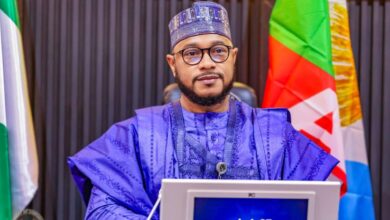
The issues he raises are important. However, I find his treatment of Senator Solomon Olamilekan Adeola Yayi, the APC governorship candidate, particularly troubling, not because the senator should be insulated from public criticism, but because some of the article’s most serious conclusions are presented without the corresponding evidence necessary to sustain them.
Sogunle is entitled to advance the political interests of his principal, Hon. Ladi Adebutu. That is, after all, part of his responsibility as Director-General of the Adebutu Campaign. He is equally entitled to interrogate the policies and public records of competing political actors. What I find difficult to reconcile, however, is the attempt to elevate partisan assumptions into established political and economic conclusions through an elaborate deployment of academic theories.
His references to Richard Joseph’s theory of prebendalism, Peter Lewis’s writings on predatory governance and the institutional scholarship of Daron Acemoglu and James Robinson are intellectually relevant to the study of African politics. Theories, however, provide frameworks for investigation; they are not substitutes for evidence.

For instance, Sogunle characterises Senator Adeola’s constituency interventions as instruments of political dependency and suggests that his legislative responsibilities in the appropriation process have been converted into resources for political patronage. These are serious assertions that should not be allowed to pass as established facts merely because they have been dressed in sophisticated political terminology.
What exactly constitutes the alleged impropriety? Which appropriation was unlawfully diverted? Which procurement process was compromised? Which payment was improperly authorised? What documentary evidence connects a particular public expenditure to the alleged conversion of legislative responsibilities into campaign finance?

These questions are fundamental. As Chairman of the Senate Committee on Appropriations, Senator Adeola occupies a position that naturally attracts public scrutiny. Nobody should suggest otherwise. However, there is a substantial difference between subjecting a public officer to legitimate scrutiny and pronouncing him guilty of financial misconduct without establishing the underlying facts.
I am equally concerned by Sogunle’s attempt to reduce Adeola’s constituency interventions to the distribution of grinding machines, hair dryers, sewing machines and other vocational equipment. Even if one were to examine these programmes in isolation, I would still question the assumption that providing productive assets to ordinary citizens is necessarily an exercise in political exploitation.

What is inherently wrong with assisting a trained tailor to acquire a sewing machine, helping a farmer obtain agricultural equipment or providing a young entrepreneur with the tools required to establish a business? Are these interventions automatically less valuable because their beneficiaries are ordinary people rather than large corporate institutions?
The economic value of an empowerment programme should be assessed by its design, sustainability, transparency and measurable outcomes, not by the social standing of its beneficiaries.
More importantly, Adeola’s publicly reported constituency activities extend beyond vocational empowerment. They include road infrastructure, educational support, ICT facilities, agricultural assistance, electricity-related projects and other community development interventions. These projects deserve to be examined individually, including their costs, implementation status and impact, rather than dismissed collectively under the convenient description of prebendal politics.
Interestingly, Sogunle acknowledges infrastructure and community interventions attributed to Hon. Adebutu and presents them as evidence of public-spirited leadership. This raises a legitimate question of consistency. If the installation of transformers, rehabilitation of community facilities and provision of economic assistance are commendable when undertaken by Adebutu, on what objective basis do similar interventions become instruments of political dependency when associated with Adeola?
Even when the discussion is narrowed strictly to project interventions and measurable impact, the comparison between Senator Solomon Olamilekan Adeola and Hon. Ladi Adebutu must be settled by verifiable evidence, not empty political noise. The questions are simple and unavoidable: what projects has each attracted or facilitated, where are they located, who has benefited from them, and what credible proof exists of their completion and impact? Once those records are placed side by side, the public can clearly see who has delivered meaningful development and who has merely traded in promises, publicity and rhetoric.
Sogunle also devotes considerable attention to Adeola’s political history in Lagos and his subsequent election to represent Ogun West in the National Assembly. There is nothing inherently improper about examining the political journey of a person seeking public office. However, a previous political career in Lagos does not, by itself, determine a person’s ancestral identity or invalidate a subsequent electoral mandate.
Questions concerning Adeola’s family background, constitutional qualification and political representation must be addressed on their individual merits. They cannot reasonably be resolved through the suggestion that his movement from Lagos politics to Ogun West is sufficient proof of political opportunism.
There is also a broader historical issue that deserves recognition. The agitation for Ogun West to produce a governor is not a political invention of Senator Adeola. It predates his emergence in the senatorial district and reflects a longstanding debate about political inclusion in Ogun State.
Since the creation of the state in 1976, its elected civilian governors have emerged from Ogun Central and Ogun East. Ogun West has yet to produce one. The implications of this history for the 2027 election remain a legitimate subject of public discussion, irrespective of the personalities presently seeking the governorship.
Turning to Sogunle’s extensive comparison of Adebutu’s ITURA DE blueprint and Adeola’s ITESIWAJU programme, I believe both documents deserve a more practical examination than the article provides.
The proposals attributed to ITURA DE, including local government financial autonomy, regional development councils, agricultural initiatives, transportation infrastructure and institutional support for artisans, raise several important implementation questions. What revenue assumptions support the proposed programmes? What would be the capital and recurrent expenditure implications? Which proposals require legislation? How would the proposed rail infrastructure be financed? What administrative safeguards would prevent the duplication of existing government agencies?
Sogunle’s criticism of the APC’s economic management at federal and state levels also deserves consideration within a proper factual framework. Nigerians are entitled to question government policies, particularly where those policies affect household purchasing power, business operations, taxation, energy costs and access to essential services.
Nevertheless, an assessment of economic performance must distinguish between federal and state responsibilities, identify the policies under consideration and examine their actual outcomes over the relevant periods. It should also acknowledge that policy objectives, implementation challenges and the distribution of economic benefits are separate matters requiring careful analysis.
To attribute every economic difficulty to a deliberate strategy of political impoverishment is a claim about motive that requires evidence beyond partisan interpretation.
I also noticed Sogunle’s references to respected political personalities, including former Governor Ibikunle Amosun, Chief Joju Fadairo, Senator Iyabo Obasanjo-Bello and Sir Kesington Adebutu, in his discussion of political conduct and respect for elders.
Respect for elders remains an important feature of our culture and political tradition. However, respect must coexist with the freedom to disagree on public questions. Where particular statements are considered inappropriate, they should be identified and examined in their proper context. Political disagreement should not automatically be interpreted as cultural disrespect, just as seniority should not place political opinions beyond legitimate public examination.
Ultimately, my concern with Sogunle’s article is that it raises questions that deserve serious attention but frequently approaches them through conclusions that have not been adequately demonstrated. His central argument rests on a distinction between institutional development and political patronage, yet that distinction cannot be established simply by describing one candidate’s interventions as prebendal and another candidate’s proposals as institutional.
Ogun State deserves an election discourse in which allegations of wrongdoing are supported by verifiable evidence, development interventions are assessed by their actual outcomes, and competing manifestos are examined for their feasibility rather than their political branding.
As a lawyer, I consider it particularly important that the distinction between an allegation and an established fact should never be sacrificed on the altar of political expediency.
Sogunle has every right to campaign for his principal, but intellectual sophistication does not relieve any commentator of the responsibility to substantiate serious accusations. Neither does the invocation of political theory automatically confer credibility on an otherwise unproven conclusion.
The people of Ogun State are entitled to examine the public records, political histories and development programmes of those seeking to govern them. They are equally entitled to expect fairness, accuracy and intellectual consistency from those who participate in that debate.
In the final analysis, the future of Ogun State is too important to be determined by competing political labels. It demands a serious conversation about leadership, institutional responsibility, public accountability and development that can be independently measured.
That conversation should be conducted with facts, not merely with adjectives.
Hon. Kayode Oladele
Chairman, Planning Committee
APC Presidential and Governorship Campaign Committee, Ogun State.