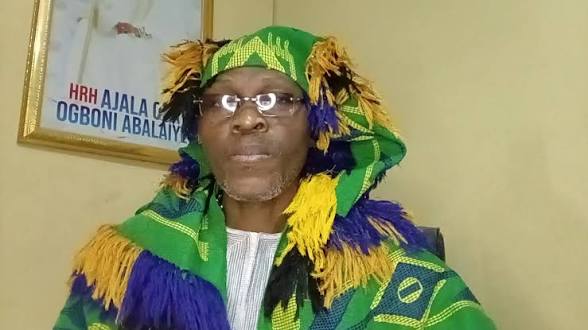
LAGOS – The Pioneer Oba Ogboni Abalaiye, Tajudeen Ajala, has attributed some of Nigeria’s political and economic challenges to what he described as the exclusion of the Ogboni fraternity from the country’s governance process.
Ajala, who spoke on the influence of the Ogboni fraternity on politics and society, said members seeking political positions were traditionally required to make oaths to uphold their promises and remain accountable to the people.
According to him, such oaths were intended to serve as a spiritual and moral checks against abuse of office, corruption and betrayal of the electorate.
He cited the late former Governor of Ondo State, Dr. Olusegun Agagu, as an example, alleging that the former governor sought the support and protection of the Ogboni fraternity while aspiring to govern the state.
Ajala claimed that Agagu was warned to abide by promises made to the people, adding that he subsequently took an oath to that effect.

He further alleged that the oath carried spiritual consequences if the former governor reneged on his commitments, linking it to the circumstances surrounding Agagu’s death in a plane crash in 2013.
The Ogboni leader said the fraternity’s influence, in his view, extended beyond politics to the economy and other spheres of society.

“If we have included Ogboni in Nigerian politics, no politician would siphon public funds or divert projects because they would be reminded that the money belongs to the masses,” Ajala said.
He argued that political office holders would be more accountable if they were bound by the kind of oath associated with the fraternity.

Ajala also dismissed suggestions that individuals occupying certain positions could be described as “fake,” arguing that such appointments were often the result of promises made during political processes.
He said political leaders should instead be held accountable for promises made to those who supported their emergence.
The Pioneer Oba Ogboni Abalaiye maintained that the fraternity’s emphasis on truth, accountability and adherence to oaths could help address some of the challenges confronting the country.
“Ogboni has influence on everything in life because they make oaths; they say the truth and tell you things as they are. They don’t deceive,” he said.
He, however, did not provide independent evidence linking Agagu’s death or Nigeria’s wider political and economic problems to the Ogboni fraternity’s alleged spiritual influence.